Overseas Projects

Fundación Biodiversidad Argentina (FBA) is a non-government, non-profit organization, founded in 1999, dedicated to the conservation of nature. Their mission is to promote the conservation of the biological diversity in Argentina, by carrying out activities related to scientific research, technology transfer, environmental education, and managing different programs and projects on conservation and sustainable use. They buy land to create reserves and protect biodiversity in key ecosystems of the country, which they manage.

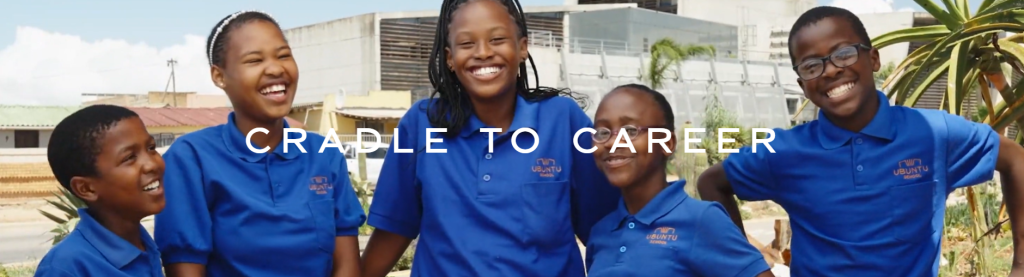
At Ubuntu Pathways, they have spent the past 26 years breaking the cycle of poverty in the community of Gqeberha, South Africa. Through a comprehensive system of education, health, and household support, they are placing 2,000 orphaned and vulnerable children on a pathway out of poverty, from cradle to career. Shifting away from traditional development models that fail to address the compounding burdens of poverty, they have pioneered a community-led, holistic approach that takes children and families from vulnerability to stability and success. In partnership with the Bertha Foundation, they have created a world-class staff development initiative.
Established in 2018 Cygnus Learning helps improve the quality of lives of disadvantaged children in Northern Sri Lanka which was affected by over three decades of war. Poverty causes children to drop out of education no matter how much they want to continue. Cygnus learning are currently raising funds to build their own premises which will house a fully functional computer lab, lecture hall, a tube well and water filter office and kitchen facilities. They offer a range of free learning so that children in this area have access to the same opportunities that children in more affluent areas of the country have.

Many children miss out on the opportunity for a better future.
We are working to change that.
Read more
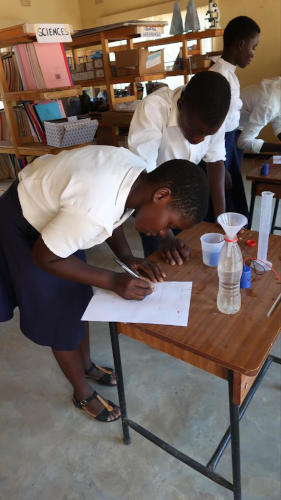 In answer to the wider question posed by your Trustees: “My only question would be what is the follow through with the kids? Can they do anything to improve their job prospects or even create community projects that offer employment?”
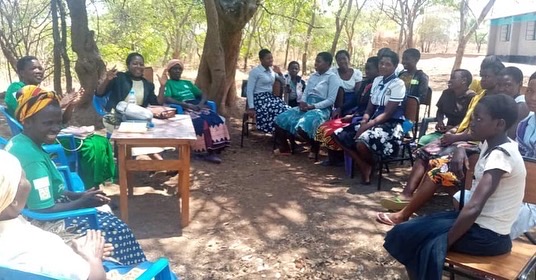
We are undertaking ‘follow through’ in Mikuyu by establishing a mentors programme, led by a former female student on her career and how she has succeeded, a deputy Head teacher and by a local medic who is keen to give his insights to the young men of the area on how to go beyond secondary school. We have also been focussed on improving the education and life experiences for the young women of Mikuyu. We have a ‘menstruation programme’ in place and well established. It is led by a local senior teacher and delivers education and some supplies to the girls – so that less time in school is lost due to menstruation. In addition this programme has benefitted many of the mothers in Mikuyu, who also want support themselves, but who have helped us in encouraging the girls back into education after the pandemic. Girls education is intrinsically beneficial, even if one cannot ‘promise’ post secondary opportunities, we still feel that these young women will be better prepared to avoid child marriage, early pregnancies and will be more confident to look beyond their expected lives as subsistence farmers.
As a Board, Malawi Schools Trust have been discussing the huge issue of job prospects and community projects. In the area of Mikuyu there is no obvious employer and Malawi faces a national problem of employment, engaging young people beyond school and also raising ambitions beyond subsistence farming. It is early days for us as a trust in facing these issues, however we have been hugely encouraged by the response of the Mikuyu community to the work we have already done, and their desire to lead further change. The local Mothers Group are looking for our help with seeds, to improve their income generation and with the extra money to invest that back into the community. The local Chief has been strongly advocating the building of a girls residential hostel to improve the educational opportunities of the local girls – we also see this as an opportunity to employ local people in supervision of the girls and in developing a vegetable garden. We see helping locally with small scale agri-business as the best prospect for improving the local economic opportunities.
We have really valued the input from generations Trust, your help has enabled the building of two staff houses. If you felt it appropriate Peter and I would welcome the chance to discuss his recent visit to Mikuyu and the MST plans that have come out of that, as I set out above we feel the building of a girls residential hostel to be the next major project, possibly housing up to 20 girls.
Thanks again for your support, engagement and interest in our work.

Prodigal Bikes is a charity that brings hope and changes lives in both Africa and the UK.
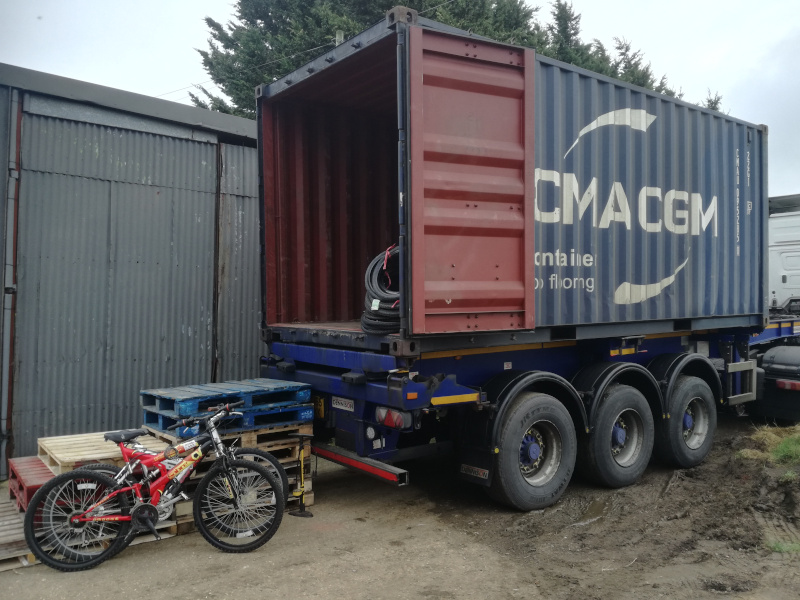
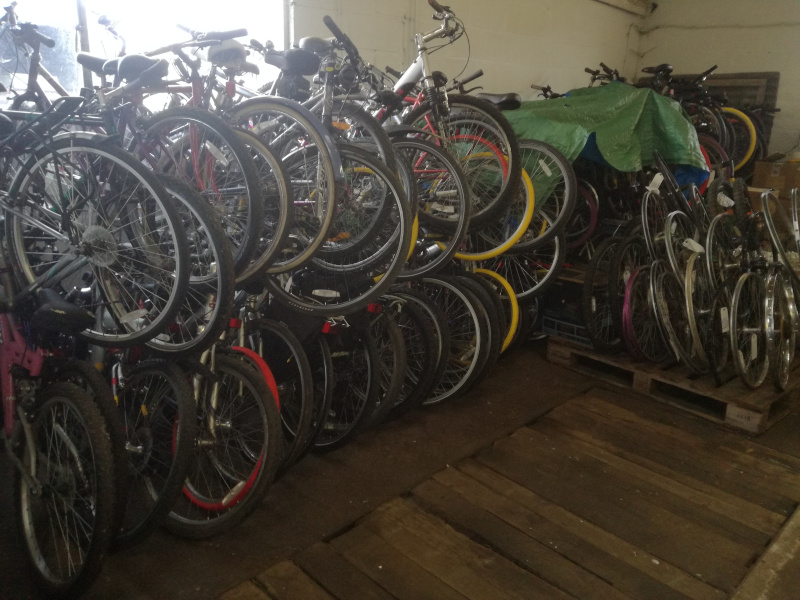
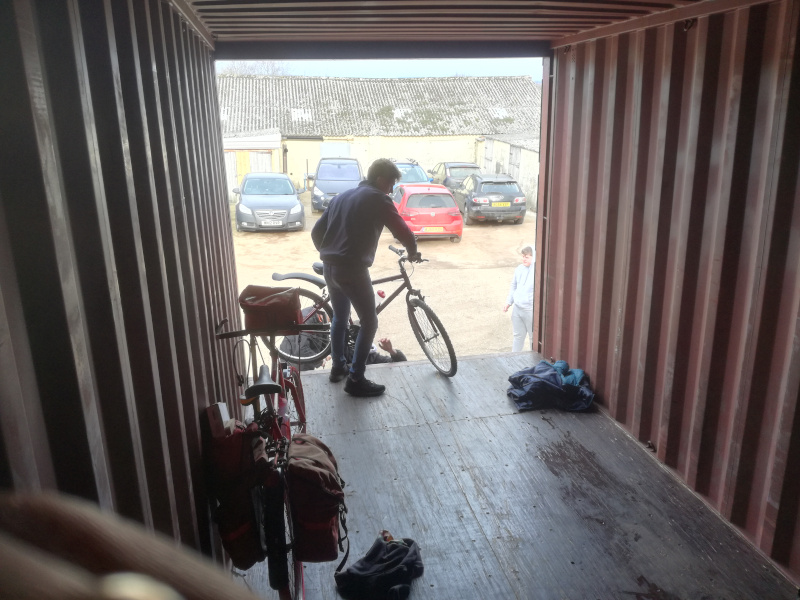
The dual focus gives local ex-offenders, long term unemployed people and excluded school children the chance to work together, learning new skills to provide for those experiencing extreme poverty and exclusion from employment, education and healthcare in Africa. Some of those supported by Prodigal have gone on to work in the construction industry and one as a guitar maker.
Graaff Reinet
South Africa
Address: Petersburg Road Off the R63 to Pearston, Graaff-Reinet, 6280, South Africa
www.samara.co.za
Right to Dream
Ghana
Sierra Leone

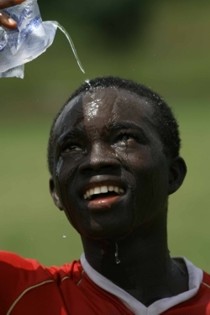
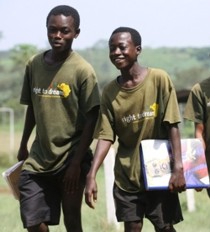
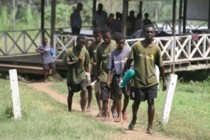
The Right to Dream Underprivileged Children’s Centre (UCC) is a drop in education and welfare centre for some of the poorest children in Ghana, many of whom are street children and orphans. The UCC teaches children the basics in numeracy and literacy, getting them to a point where they can then attend school. Local schools are then identified and the costs of sending the children to school are met by the UCC which also provides ongoing support to those children.
- Right to Dream have been able to further develop the partnership between the Academy and the UCC, for example now the Academy pupils assist with teaching on a weekly basis at the UCC.
- At the UCC, a permanent home has been found for the centre which allows a number of the homeless children to live on-site, as well as providing flexible teaching spaces which meet the needs of the children attending the centre
The right To Dream Academy has 51 Student-Athletes at world leading institutions and 38 professional footballers living their dream.
The Finch Family Reserve
Chaco-Pantanal
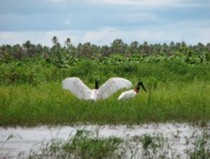
Jabiru Storks, the largest stork in the world, are typical of this habitat and easy to see
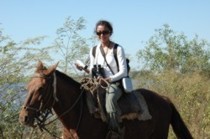
Rohini Finch of the Generations Foundation sets out on horseback to see the Reserve.
The annual flooding of the Pantanal wetlands provides a vital habitat and food supply for migrating birds from across the Americas. Year-round, it supports endangered species including the ‘Three Giants’: Giant Anteater, Giant Otter and Giant Armadillo. The reserve’s Three Giants biological station takes its name from them, and provides a base for international research.
Campo Iris
Dry Chaco, Paraguay
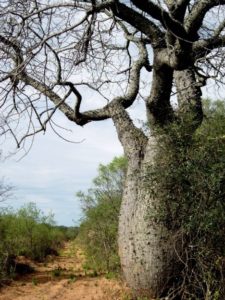
The Palo Borracho or ‘Drunken Tree’, Campo Iris
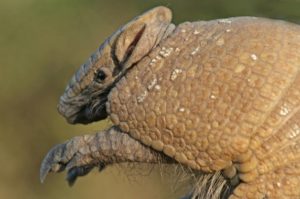
Southern Three Banded Armadillo, Campo Iris
Large mammals of the Chaco include Puma, Lowland Tapir, Giant Anteater and the world’s greatest diversity of armadillos. Important for all these species, Campo Iris protects the only water source for many miles, making local wildlife dependent on the reserve for its survival.
World Land Trust
Blyth House
Bridge Street
Halesworth
Suffolk
IP19 8AB
Since then, WLT has raised funds to purchase and protect over 774,000 acres of threatened habitats across the world, with projects in countries such as Argentina, Brazil, Colombia, Ecuador, Mexico, Paraguay, India, and Armenia.
WLT always works with local partner organisations who take on ownership and ongoing responsibility for protecting and managing the reserves. WLT also helps promote sustainable and environmentally friendly livelihoods for local communities, such as ecotourism, crafts and sustainable forestry, and supports reserve protection across its partners through its ‘Keepers of the Wild’ (ranger) programme. The intention is always for projects to become independent from WLT and continue to thrive on their own, protecting wildlife and its habitats for the future.
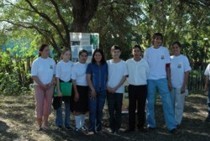
Bahia Negra is the nearest community to the Chaco-Pantanal Reserve and the young people who live there run an extremely vibrant Eco-Club.
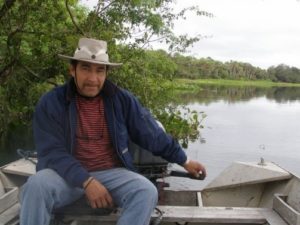
Keeper of the Wild Asterio at the Chaco-Pantanal reserve.